


Good day care is about far more than filling a few hours. For people living with dementia, and for the family and friends who support them, the right service can create opportunities for connection, confidence, meaningful activity and regular breaks from caring.
This article looks at what the evidence says, what good support can look like in practice, and where people in East Lothian can find further help.
The National Institute for Health and Care Excellence, or NICE, recommends that people living with dementia should be offered a range of activities that promote wellbeing and are tailored to their own preferences. NICE also recommends considering group reminiscence therapy for people with mild to moderate dementia.
That matters because an activity is more likely to be meaningful when it connects with the person rather than simply occupying time. Music, conversation, baking, movement, familiar routines, creative activities and reminiscence can all have a place, but what works for one person may not work for another.
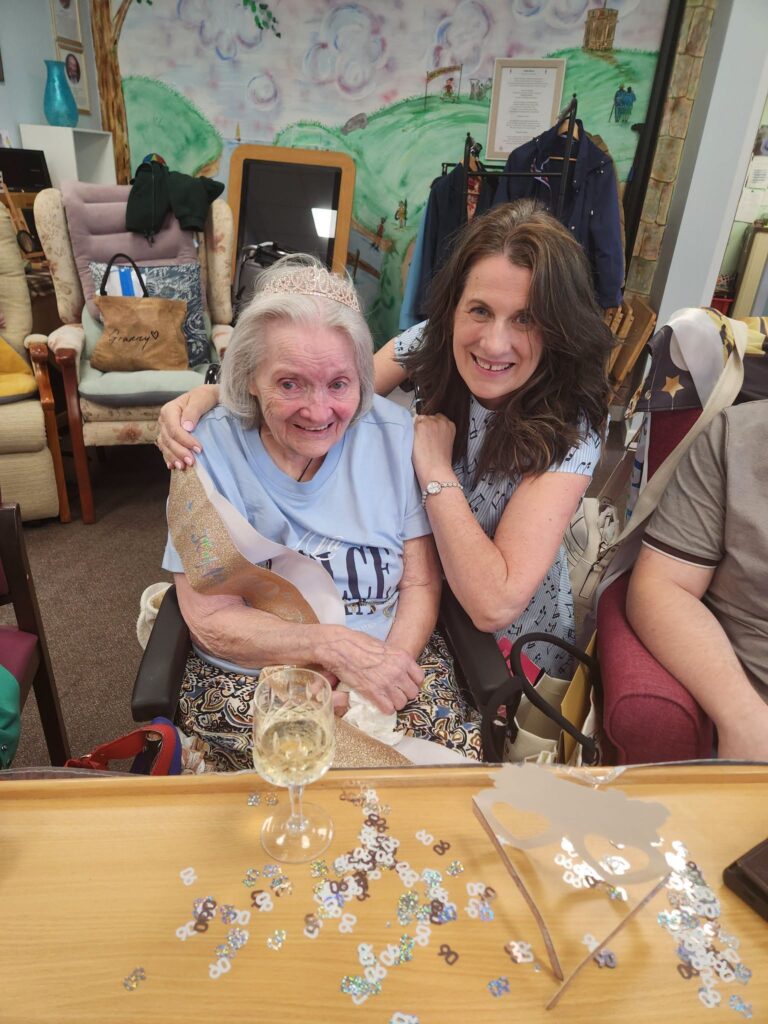
At Harlawhill, this is why we place so much value on knowing the individual, their history, their interests and what makes them comfortable. The aim is not to make everybody do the same thing. It is to create opportunities to take part, belong and enjoy the day in a way that feels right for them.
Read the NICE dementia recommendations
NICE guidance on independence and mental wellbeing in later life recommends activities that provide opportunities to socialise, support a sense of belonging and help people maintain purpose and connection with their community. It also highlights group activities such as singing, arts and crafts and tailored physical activity.
For someone whose world has become smaller because of dementia, frailty, reduced mobility or anxiety, a regular day service can offer something that is difficult to recreate at home: a familiar place, trusted people, shared meals, conversation and a reason to look forward to the day.
Read NICE guidance on older people’s independence and mental wellbeing
Day care does not only affect the person attending. It can also give an unpaid carer time to rest, attend appointments, spend time with other family members, work, shop, or simply have a few hours in which they are not directly responsible for someone else’s care.
NICE recommends that carers are given information about support services and that health and social care practitioners regularly discuss the value of breaks from caring. In Scotland, carers have specific rights under the Carers (Scotland) Act 2016, including access to an Adult Carer Support Plan. Changes introduced through the Care Reform (Scotland) Act 2025 are also intended to strengthen access to personalised short breaks support as the new provisions are implemented.
Read NICE guidance on supporting adult carers
Read Scottish Government information on the developing right to breaks
There is no single model that will suit every person or every family. But good day care should feel personal rather than institutional. People should be treated as individuals, supported to make choices, offered meaningful activity and given opportunities to build relationships.
For families, a good service should also provide reassurance. That means knowing the person they care for is safe, known by the staff and spending time in a place where their abilities, preferences and personality still matter.
At its best, day care is not simply about giving somebody somewhere to go. It is about helping people remain connected to themselves, to other people and to their community, while also supporting the people who care for them.
East Lothian has ten older people’s day centre services across the county. The current local picture includes Harlawhill in Prestonpans, Musselburgh, John Bellany in Port Seton, Dunbar, Haddington, East Linton, Ormiston, Tranent, North Berwick and Gullane. Services vary between centres, so it is best to contact the centre directly to discuss what support is available, current vacancies and referral arrangements.
Note: East Lothian Council’s online day-centre directory is still being updated and does not yet appear to reflect every current service. The Hollies in Musselburgh is a community support organisation and is not included here as one of the ten older people’s day centres.
East Lothian Council day centres and lunch clubs directory
If you are caring for someone in East Lothian, there are several local sources of help worth knowing about.
East Lothian Council’s unpaid carer information explains local rights and support, including breaks from caring, financial help, Adult Carer Support Plans and the Adult Carer ID Card.
Support for unpaid carers in East Lothian
Adult Carer Support Plans give carers an opportunity to discuss how caring affects their health, relationships, finances, employment, life balance and need for breaks, and to identify what support may help.
Adult Carer Support Plans in East Lothian
Carers of East Lothian provides free and confidential support to adult carers, including advice on benefits, health and social care, support groups, counselling, legal advice clinics and help to apply for relevant grants, including support for breaks from caring.
East Lothian Council information on local adult carer support
Financial support may also be available. East Lothian Council provides current information on Carer Support Payment and local advice services.
Financial support for carers in East Lothian
Adult Carer ID Card applications are available locally and can help recognise a caring role and record emergency contacts.
Apply for an East Lothian Adult Carer ID Card
This article provides general information and does not replace individual health or social care advice. Services, eligibility and financial support can change, so readers should check the linked organisations for the most current information.
NICE: Dementia assessment, management and support
NICE: Older people, independence and mental wellbeing
NICE: Supporting adult carers
East Lothian Council: Support for unpaid carers
East Lothian Carers Strategy 2026 to 2029
Scottish Government: Right to breaks and support plans for unpaid carers