


Why Music Matters in Dementia Care: Memories, Connection and Conversation
A familiar song can do much more than fill a quiet room. For someone living with dementia, music can bring pleasure, encourage movement, prompt a memory or create an opening for conversation when words have been difficult to find.
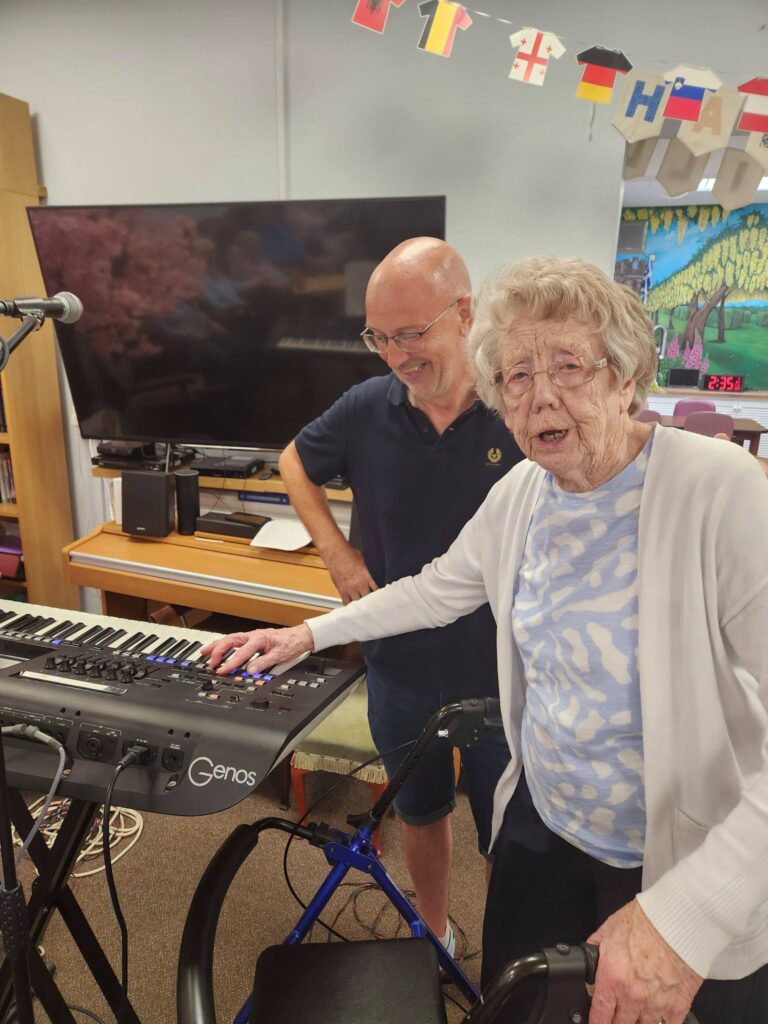
At Harlawhill, music is part of everyday life. Sometimes it is a planned activity with a live entertainer. At other times it begins with a simple request for a favourite song, singer or musical era. What matters is that the music means something to the person listening.
Why familiar music can be so powerful
Music is closely connected with memory and emotion. A song may be associated with a particular person, place or period of someone’s life. Hearing it again can sometimes bring back feelings or memories that have remained when other information is harder to retrieve.
Research into music and dementia is still developing, and music is not a treatment or cure for dementia. However, evidence suggests that music-based activities can support wellbeing and may help some people with mood, engagement, communication and symptoms such as agitation or anxiety.
NICE guidance recommends offering people living with dementia activities that promote wellbeing and are tailored to their own preferences. That idea of personal choice is central to the way we use music at Harlawhill.
Read the NICE dementia recommendations
The person’s music matters
There is no single type of music that is right for an older person or for someone living with dementia. The important question is not simply how old somebody is, but what music has been part of their life.
For one person it may be traditional Scottish music. For another it might be Frank Sinatra, Elvis Presley, The Beatles, country music, rock and roll, a favourite musical or songs they remember from going dancing. Musical tastes also continue to develop throughout life, so we should not assume that somebody only wants to hear music from their youth.
Knowing something about the person helps. Family members can often tell us about favourite singers, records that were played at home, songs connected with holidays or music that has particular family meaning.
How we use music at Harlawhill
We regularly welcome live entertainers to the Centre, but music does not have to wait for a planned entertainment session. We also use Alexa and YouTube to give members individual and group choices.
Someone may ask for a particular singer, song or era and we can usually find it within seconds. A group might decide they want music from the 1950s or 1960s, while an individual may suddenly remember a song they have not heard for years.
That flexibility is valuable because the song is often only the beginning. One person starts singing, someone else recognises it, another remembers where they used to dance or who they listened to it with, and a conversation develops naturally. Music can lead to laughter, singing and movement, but quieter reactions can be just as meaningful.
Sometimes a member cannot remember the title of a song but can tell us something about the singer, a few words or the story they associate with it. Looking for the song together can itself become part of the conversation.
Music as a shared experience
Listening to music alone can be enjoyable, but music also gives people something to share. At Harlawhill, a familiar song can draw several people into the same moment even when their abilities and experiences are very different.
That is one reason live music can work particularly well. The entertainer can respond to the room, take requests and involve people at their own level. Some will sing or dance, others may tap a foot, smile, watch or simply listen.
We do not judge the success of a music session by how many people are singing. The response of the individual matters more.
Using music at home
Families do not need specialist equipment to make music part of everyday life. A radio, television, phone, tablet or smart speaker can all provide easy access to familiar songs.
Devices such as Alexa can be particularly useful because a favourite artist or song can be requested without searching through CDs or records. Families can also create playlists containing music that has personal meaning rather than relying on a generic collection labelled for older people or dementia.
YouTube can be useful for finding particular performances and older recordings, especially when seeing the singer or band is part of the memory. Radio stations playing music familiar to many older listeners, including Boom Radio and Gold, can provide another simple option when nobody wants to choose individual tracks.
Visit Boom Radio
Listen to Gold
Follow the person’s response
Music can bring strong emotions as well as happy memories. A song connected with somebody who has died, for example, may bring sadness. That does not automatically mean the music should be avoided, but the person’s reaction should guide what happens next.
If somebody appears uncomfortable, distressed or simply uninterested, there is no benefit in insisting that they continue listening. Person-centred music means respecting a person’s preferences, including the choice not to take part.
A simple starting point for families
If you are caring for someone living with dementia, try thinking about the soundtrack to their life. Which singers did they choose for themselves? What did they dance to? Was there music associated with their wedding, holidays, work, family celebrations or nights out?
You do not need a long playlist. A handful of songs with genuine personal meaning can be a good place to start. Listen together when possible and see what happens. The most valuable part may not be the song itself, but the smile, story or conversation that follows it.
This article provides general information and does not replace individual health or social care advice. People respond to music differently, so choices should always be guided by the individual’s preferences and reactions.
Sources and further information
NICE: Dementia assessment, management and support
Alzheimer’s Society: Music and dementia